Mission

Problem Statement
In the new digital age, many people find their eyes strained by looking at screens. This is no surprise - many spend hours looking at their phones, or if not their computers. The American Optometric Association has even coined a term: Computer Vision Syndrome. Hence it's important to know when your eyes are strained to avoid eye damage.
Our Solution
We use your blink rate to detect if the eyes are strained or not. Using a capacitance sensor, we can detect when you blink, and we can tell how much and how often you've blinked over time to analyze your strain and alert you if you've used your eyes too much.
How does it work?
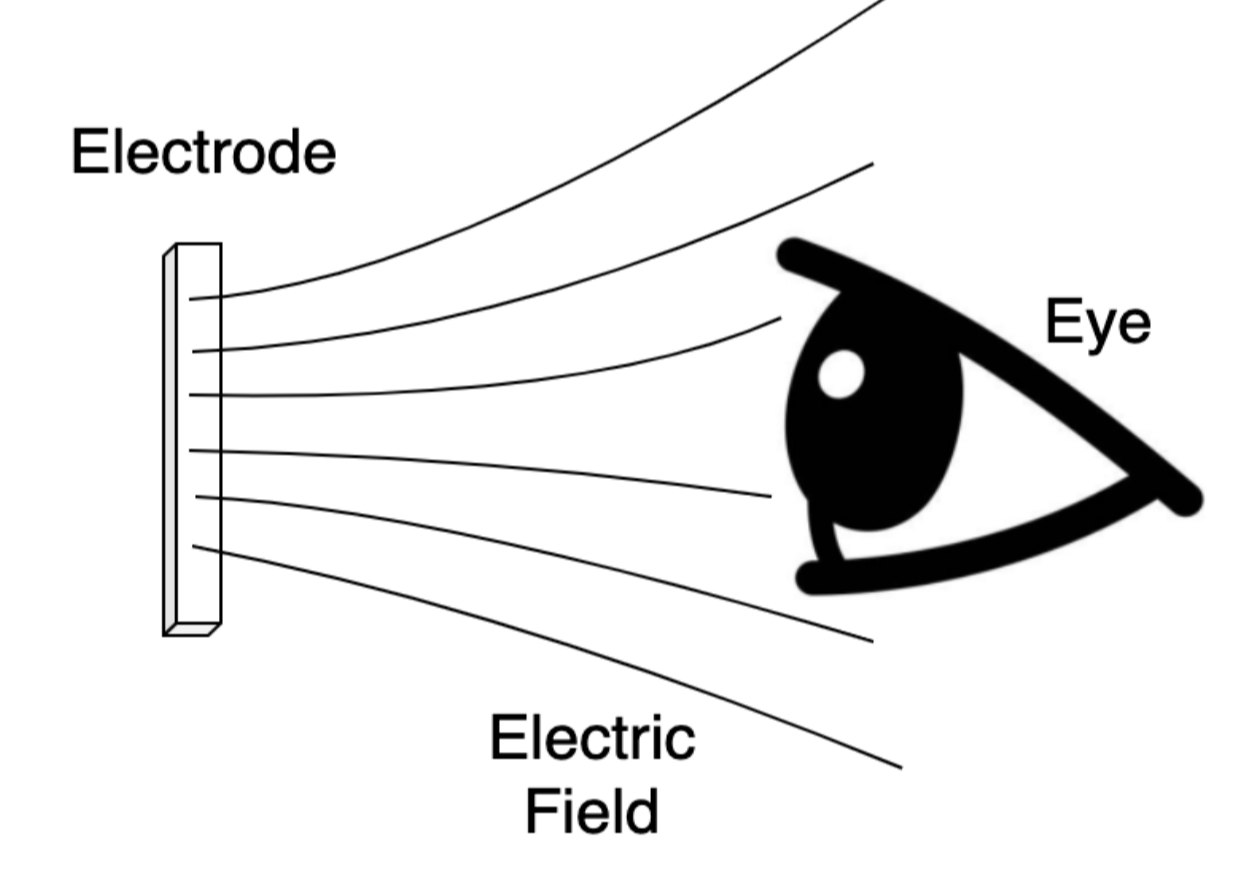
First, we use a capacitance sensor to detect blinks. Capacitance is the
measure of how much electric potential energy a system can store, and is
dependent on a property of the system called the dielectric constant. If
we place an electrode near the eye, it forms a system with the eye and
eyelid that can be analyzed. When the eyelid skin covers the eye, the
dielectric constant of the system increases, leading to a spike in
capacitance.
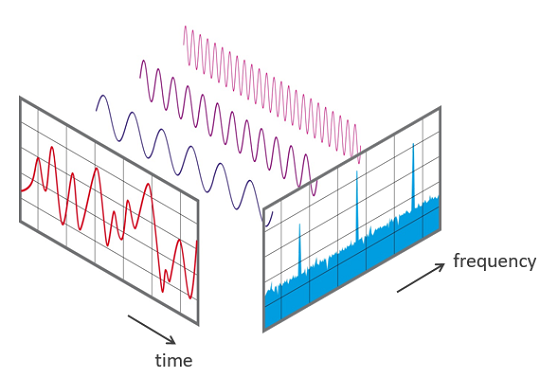
Next, we feed in the data of signals from blinks into a Fast Fourier
Transform (FFT), an algorithm that detects the main frequencies of the
signals; that is, the rate at which spikes in signals, and therefore
blinks, occur. The blink rate is then used to determine if the eyes are
strained or not. If the blink rate is too low, then the eyes are
strained, and the user is informed to take a break.